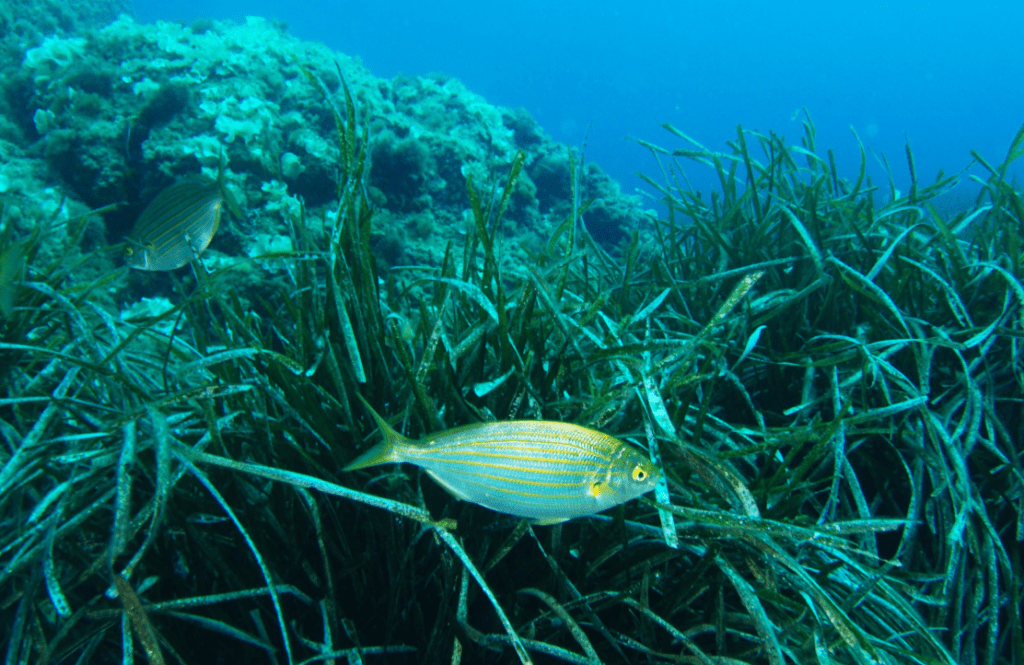
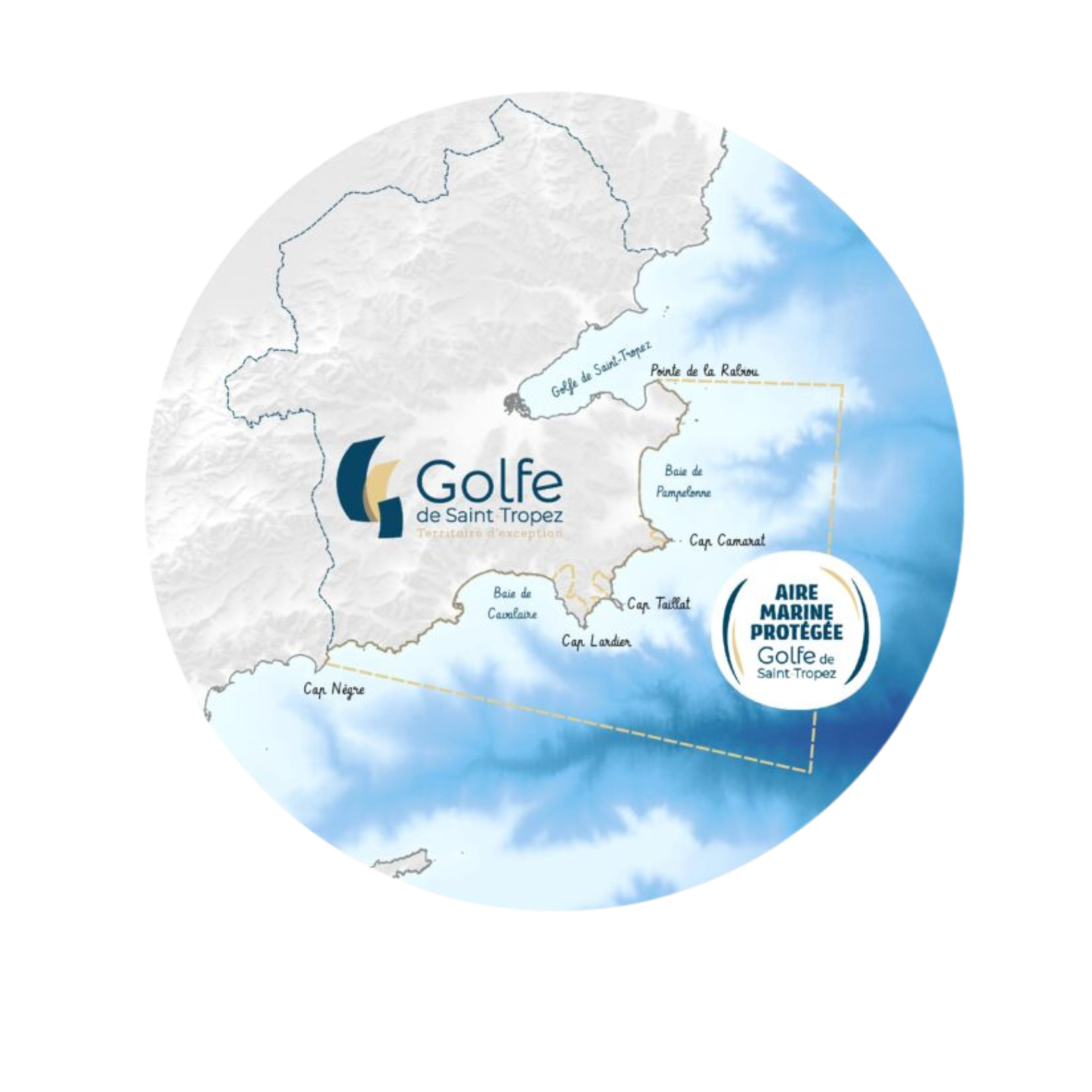
At the heart of Pampelonne Bay, Posidonia seagrass forms a vital Mediterranean ecosystem that must be preserved.
By organizing mooring activities and replacing traditional anchoring with environmentally controlled mooring solutions, the ZMEL directly contributes to protecting the seabed and preserving marine biodiversity.
Preserving Posidonia is essential to the bay’s ecosystem
An investment of over 7 million euros to protect Pampelonne Bay.
What is posidonia?
Posidonia oceanica is a flowering seagrass species endemic to the Mediterranean Sea.
It can grow up to 1.5 meters high and develops at depths ranging from 0 to 38 meters.
Its growth rate is extremely slow — only 1 to 3 centimeters per year.
The ecological importance of Posidonia
Posidonia meadows play a critical role in protecting the coastline against erosion, stabilizing the seabed, absorbing carbon, and producing oxygen. They are also key indicators of water quality and provide habitat for more than 400 plant species and several thousand marine animal species.
Mooring regulations
The creation of this Ecological Mooring Zone (ZMEL), composed of 210 mooring buoys, aims to protect Posidonia meadows from the damage caused by conventional vessel anchoring.
€7 million invested in the Pampelonne Mooring installation
The mooring systems are installed using environmentally friendly anchoring solutions adapted to each type of seabed, with minimal impact on the marine environment. The systems are elevated above the seabed to preserve Posidonia growth and are removed outside the operating season.
This project has received financial support from the Rhône Méditerranée Corse water agency, in the amount of €3,263,400.00.
The Water Agency is a public institution of the State that works to protect water and the environment. It collects taxes on water paid by all users and reinvests them with owners of water infrastructure (local authorities, industries, farmers, and associations) according to the priorities set out in its program “Let’s Save Water 2025–2030”.
The Water Agency is also committed to restoring biodiversity by supporting the restoration of ecosystem functions. Restoring rivers, lakes, wetlands, and coastal areas in the Mediterranean is in fact essential for many species. The Water Agency also aims to restore ecological corridors that promote the movement of species dependent on aquatic environments, which are necessary for the completion of their life cycle.